
The planned session was to be a talk entitled "The RNLI 200 years” and presented by Martin Kenney, ex-coxswain of the Tynemouth lifeboat. Due to circumstances, he was unable to deliver this in person, but was able to pass on the presentation.
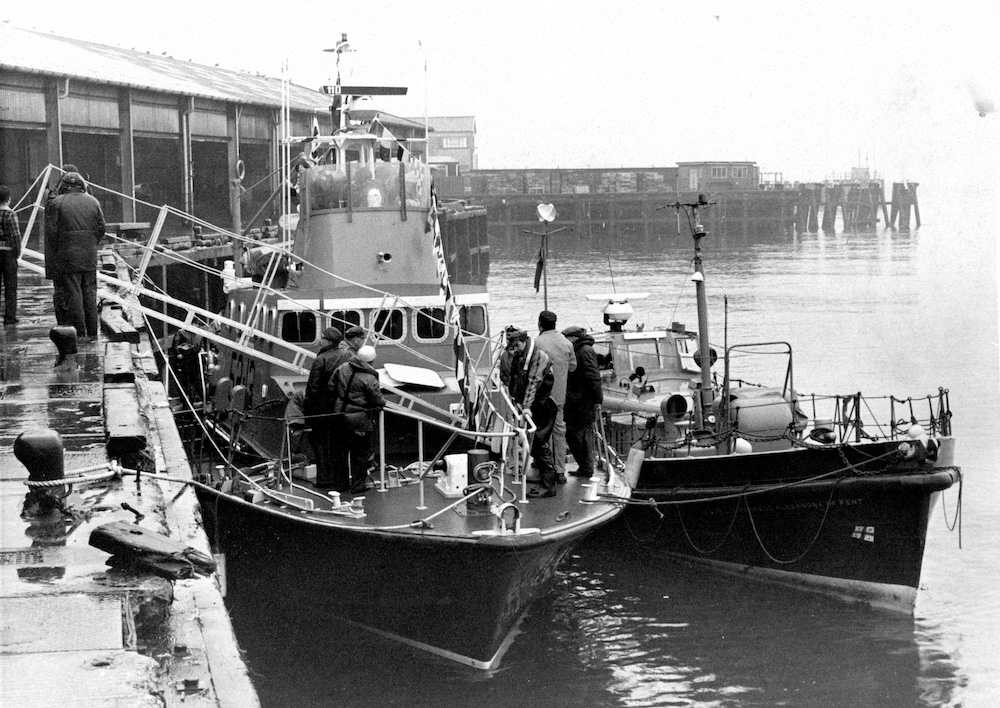
The history of lifeboats in the UK predates the formation of the RNLI, for example, locally the Tyne lifeboat Institution existed from 1789. It still continues to this day as a charitable body “The Tyne Lifeboat Society”.
Development was slow and whilst the Society Of Arts became involved in lifeboat design around 1802 wasn’t until 1824, Sir William Hilary, living on the Isle of Man and aware of the losses around his own shores, did pursue the cause and matters progressed. Eventually, on the 4thMarch 1824, “The Royal Institute of the Preservation of Life from Shipwreck”, RNIPLS was formed. In 1854, the name changed to the one we recognise today “The Royal National Lifeboat Institute”, RNLI.
The Institute has always been a charitable organisation, although at times the provision of funds was difficult from around 1850, even with government grants. But that issue became difficult and those Government links were severed in 1869, with the Institution maintaining its charitable status thereafter.
The talk proceeded though the advancement of the design of these lifeboats with the ultimate aim of having self-righting boats to reduce the crew losses. The other inevitable changes were to the modes of propulsion from oarsmen, accompanied by sail where possible, a slight detour into steam-driven lifeboats to the first trials and use of internal combustion driven boat in 1905 – namely petrol fuelled at first and then to diesel as the designs and sizes of the boat increased. The first boat of this type was stationed at Tynemouth and named “J McConnell Hussy”. A few years later, following that successful introduction, the second motor- driven lifeboat arrived at Tynemouth the “Henry Veron”.
The present vessels, operated by the RNLI, of which there are over 400 at 238 stations are ; All Weather Fleet (ALBs) consists of the Shannon, Severn, Trent, Tamar and Mersey class boats, typically with 6 to 7 crew; and the Inshore fleet (ILBs) consists of D class, B class and E class boats, rescue hovercraft and the small inshore rescue boats. They were described is some detail.
The talk concluded with the disasters and the loss of lifeboat crews over the years, with the erection of a RNLI Memorial Sculpture at Poole to them. There are 438 names in the two memorial books whilst there are over 800 on the memorial itself which include the pre-1824 losses.
Next meetings: Thursday 18th June 2pm in The Witham, will be Jane Harrison with a talk on the “Copper Mining”. This maybe followed by a car share trip to Middleton Tynas, the site of our most local copper mines.
The following month on the 16th July will be our next in the series of Understanding Geography, titled "Physical Geography and Earth's Natural Hazards."