
This month we discussed the devastating effects of summer heatwaves, wildfires and droughts on food crops throughout the UK and Europe. As the UK imports approximately 40% of our food, crop losses are likely to result in higher prices for milk, meat, animal feed, vegetables, orchard fruit and grain. Plans and policies made by the United Nations, the European Commission and the UK government are all pointing towards the need for farmers to nourish soils to hold more moisture, to capture and conserve rainwater, adopt nature-friendly 'regenerative' farming practices, diversify crops and develop heat-tolerant varieties.
If you have a garden, or space for a few large pots, it can be very rewarding to grow some of your own food - my raspberries, strawberries, rhubarb and blackcurrants have fruited well this year. Most vegetables depend on regular (early morning) watering. Using water butts that fill up in spring, spreading mulches to retain moisture and shading crops from blistering heat make this activity more sustainable. A small pond in a damp corner will soon attract frogs that will help deal with garden pests, including slugs.
Buying fresh natural foods from local shops, farm shops and markets, avoiding supermarket bread that is bulked up with ground chalk and highly processed foods (which often include large amounts of emulsifiers, fat, sugar and salt) are good ways to stay healthy and to support local food producers and farmers.
Good News includes an Earthshot Prize winner, Notpla that, in its first 3 years, has replaced over 32 million items of single use plastic with seaweed-based materials.
The Cairngorms National Park woodland expansion plans include monitoring, using Lidar laser scanning, a survey area containing over 6 million trees, that identified 2.65 million young, naturally regenerated, native trees (40%).
Nature has recovered fast on a former golf course on the Lincolnshire coast, transformed into a wetland nature reserve that has seen the rapid return of skylarks, short-eared owls, avocets and curlew.
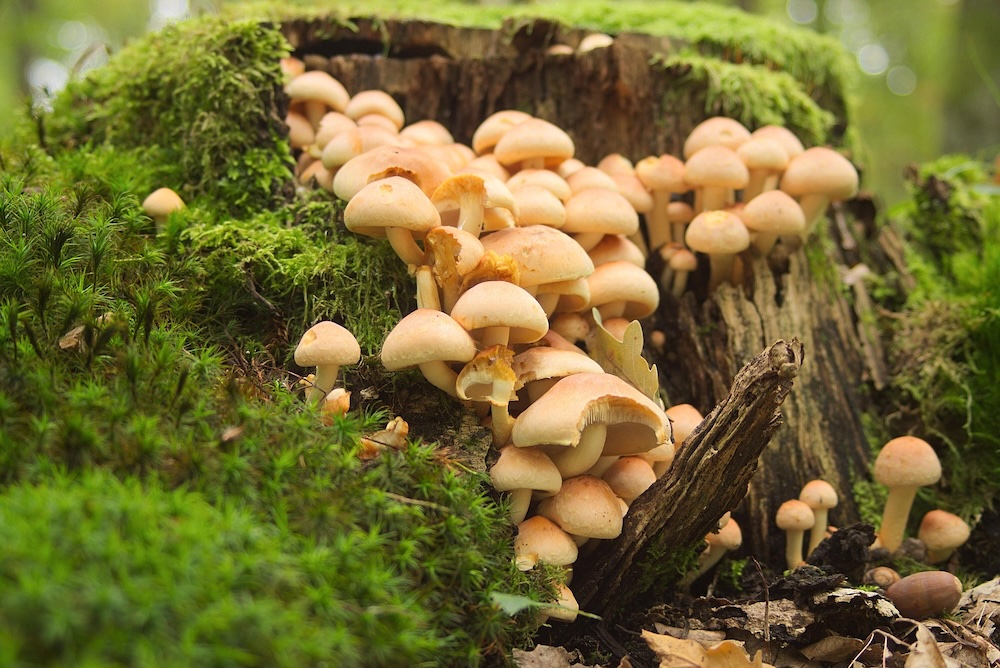
A farm in Northumberland is trialling a carbon capture and food production technique known as ‘myco-forestry’, which could deliver carbon-negative edible mushroom crops. The underground mycelium strands of the fungi act as natural carbon storage units in the soil.