
In July we explored the life and works of Johannes Vermeer of Delft (1632-75). Although only around 36 of his paintings have survived, he is regarded as one of the supreme masters, above all for his treatment of light. His paintings breathe an atmosphere of coolness, tranquillity and harmony, which has captivated art lovers across the world. His restrained style, where nothing is explicitly stated and everything is left to the viewer’s imagination, has created an air of mystery around his work that is a source of endless fascination.
We concentrated on five of the best-known and loved pictures, starting with A View of Delft. The first thing that strikes us about this vision of his home city is that nothing much seems to be happening: it is early morning, before the busy traffic on the river has got going, so full value can be given to the purely pictorial elements of the scene. The buildings, the sky, the water are all carefully brought together in perfect harmony, under that extraordinary light.
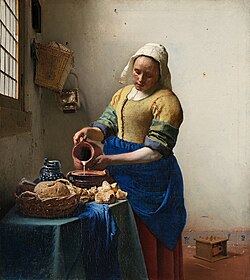
A Lady Standing at a Virginal is one of several Vermeers exploring the theme of music and its associations with love (note the picture of Cupid on the wall behind her) and harmony. The Milkmaid (in fact, a domestic kitchen maid) is by contrast a study of a servant, in the simple act of pouring milk into a dish, a monumental figure in cool blues and yellows set against a rough whitewashed wall, all its imperfections meticulously rendered.
The Girl with a Pearl Earring has taken on a life of her own, an icon instantly recognisable worldwide, exploited in merchandising and tourism, subject of a bestselling novel and film, and of endless speculation as to her identity. However, it is not a portrait in the conventional sense but a ‘tronie’, a genre study of a head used to explore different emotions, poses and costumes, in moments captured from everyday life. And the ‘pearl’ is paste…
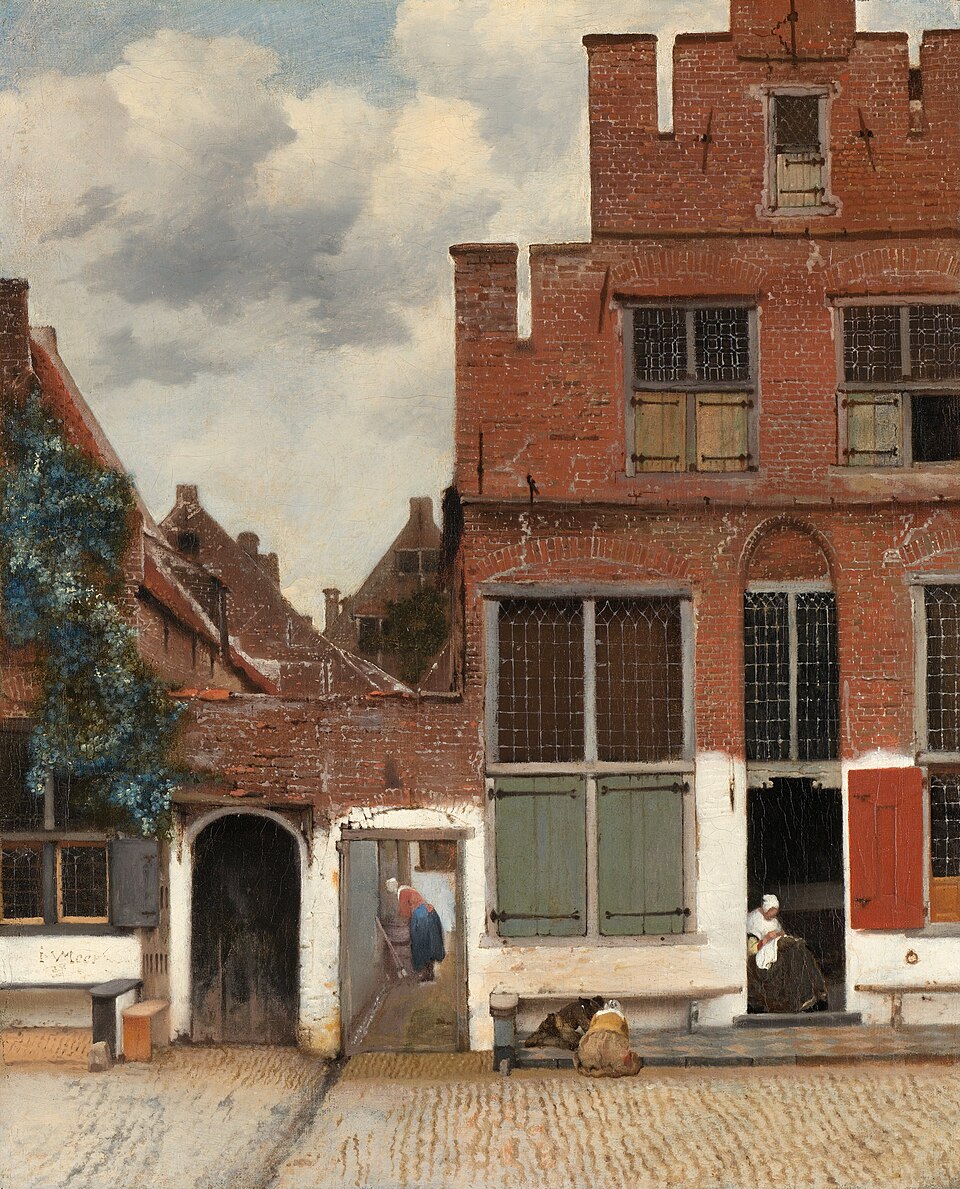
We finished with ten minutes’ quiet contemplation, followed by discussion, of The Little Street, with its timeless glimpse of houses in Delft, cropped as if by a modern photographer to focus on the subtle beauties of shape, colour and texture in this simple scene.
The Little Street, c.1658 (Rijksmuseum, Amsterdam)
On Wednesday 5 August, we move on to the 20th century master of form and colour Henri Matisse.