
On 4 November,16 of us assembled in the foyer of the Bowes Museum and split into two groups, in order to visit each of the two current exhibitions in turn. One group took a tea break in Café Bowes between seeing them both, while the other decided to go straight from one to the other without refreshment!
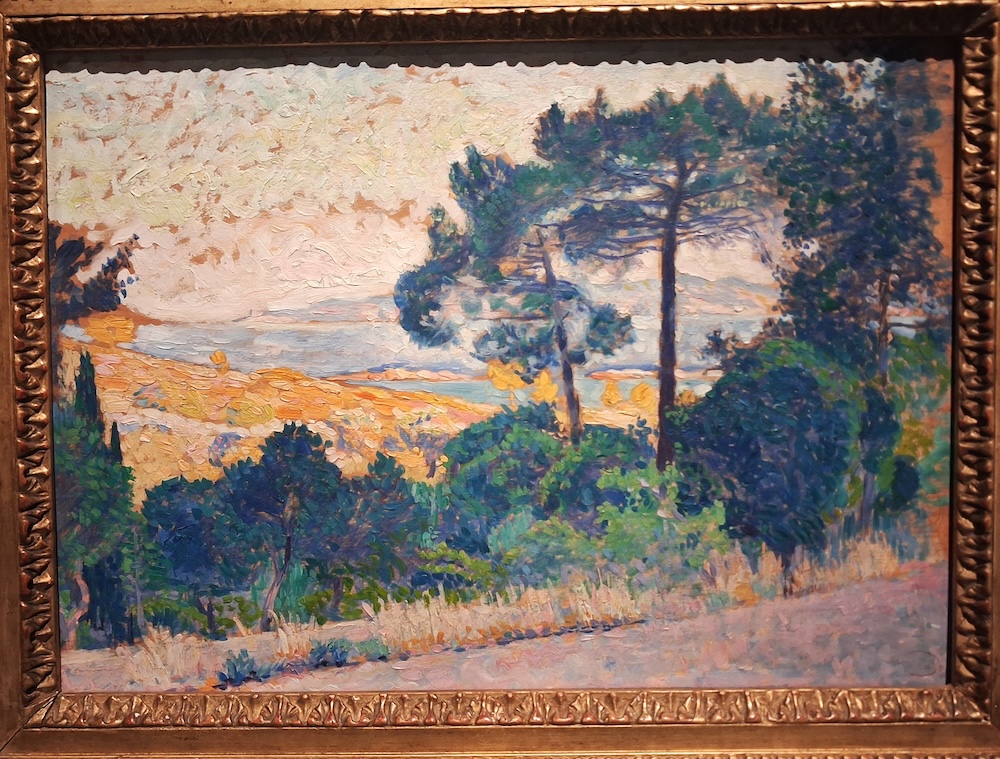
In the temporary exhibition gallery on the 1st floor we saw Impressions of Light. Masterpieces from the Museum of Modern Art (MuMA), Le Havre, and The Bowes Museum. bringing together French paintings from the two collections. They trace the evolution of landscape painting from Pre-Impressionism to Post-Impressionism, featuring well-known artists such as Courbet, Monet, Boudin and Dufy, and others who were new to many of us.
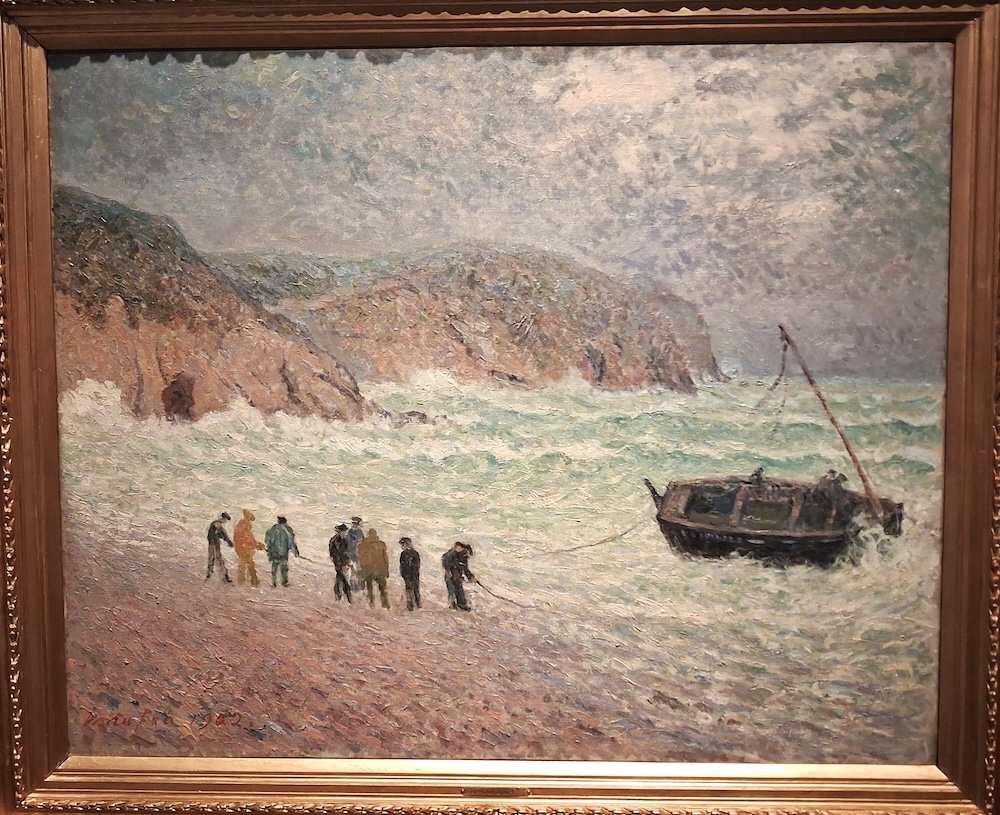
At the same time, it celebrates the strong links forged by John and Joséphine with the port of Le Havre, and points up the similarities between the industrialised area around it, and the coalfields of Co. Durham.
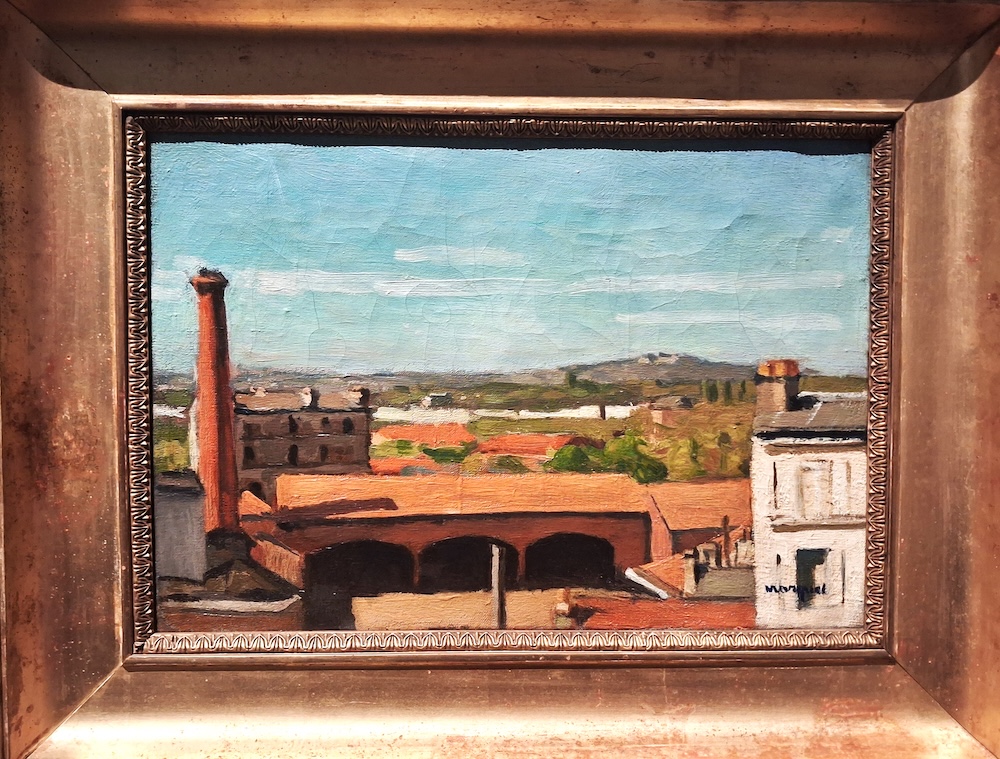
One small quibble: the title of the exhibition was felt to be somewhat misleading, as only its small central section consists of Impressionist paintings per se. The exhibition has a much wider timespan, from Courbet and even earlier, to Raoul Dufy’s View of Le Havre with Rainbow of 1936.
On the 2nd floor, Norman Cornish. A Life in Sketchbooks gives an intimate glimpse into the working practices of this much-loved local artist. As well as a generous selection from the hundreds of sketchbooks he filled during his career, it includes filmed interviews with members of his family, and a historic video of Norman walking around Spennymoor highlighting the people and scenes he loved and transformed into works of art. One case also displays his painting materials, including the infamous Flo Master pen which was apparently very difficult and messy to use, but he managed to master it! We marvelled at the fluency of his sketches, and learned how he carefully assembled the various motifs into his finished compositions – scenes from the pub and the street, miners going to work, industrial landscapes. On a more domestic scale are the affectionate studies of his wife Sarah and children.
At our December meeting, back in Enterprise House, we will explore the life and work of Stanley Spencer.