
At our May meeting we looked at three masters of still life – Zurbarán, Chardin and Cézanne. The best still lifes invite us to pause, take time and contemplate their carefully disposed compositions of form and colour. In some cases, the main satisfaction is aesthetic - enjoyment of the artist’s skill - but they can also carry a powerful emotional charge, engaging our full humanity in close engagement with the beauty of everyday objects – fruit, bread, kitchen utensils.
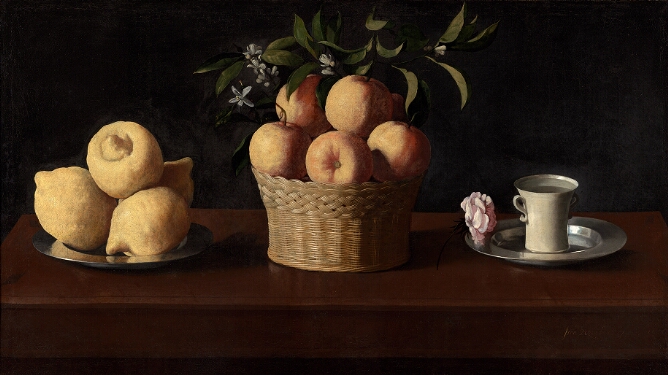
First up was Francisco de Zurbarán (1598-1664), coincidentally the subject of a revelatory exhibition just opened at the National Gallery. We of course are no strangers to his work, but many of the reviewers were blown away by this, to them, little-known artist. He only produced two or three pure still lifes, but many of his sacred paintings include arrangements of objects in the background which might as well be. The most stunning of the former is Still Life with Lemons, Oranges, and a Rose. The drama of this arrangement against its dark background is similar to his use of chiaroscuro in the religious paintings, and the objects can be read as symbols of the Trinity and the Virgin Mary.
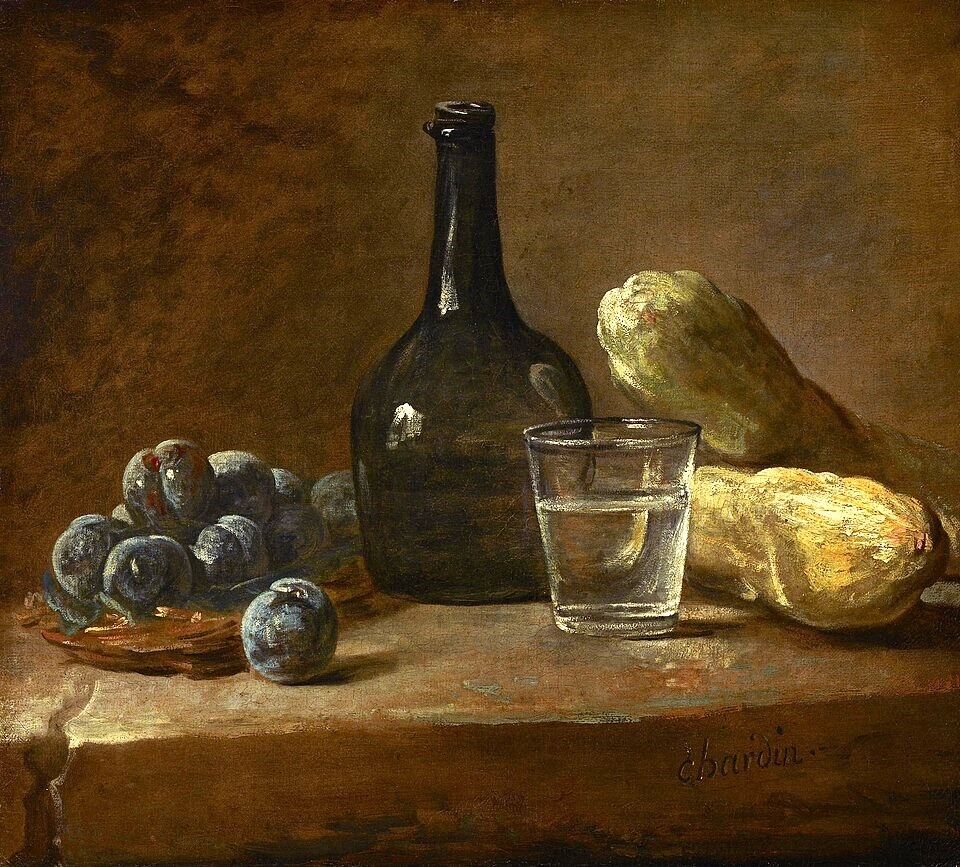
There is no such symbolism in the work of Jean-Siméon Chardin (1699-1799), simply a total commitment to rendering the ‘thingness’ of the object. Professor Kloss identified the hallmarks of his style in the rich colour, disciplined composition and pathos of one of his paintings of dead game. This subject was popular at the time, so in demand from his patrons, but nowadays we tend to be more attracted by his still lifes of foodstuffs and domestic objects. One of the most outstanding is his Still Life with Plums, from the Frick.
Chardin was also pre-eminent in genre subjects (pictures of everyday life), one of which, A Lady Taking Tea (the sitter thought to have been his wife) at the Hunterian Museum, Glasgow University, was the subject of a short video from the OU.
To conclude, we saw the lasting influence of Chardin on his successors in the French tradition, through the realism of Courbet to Cézanne, who took still life in the direction of Cubism, playing with perspective and moving towards abstraction. Many apples!
The next meeting will be on Wednesday 3 June at the Bowes Museum, for a tour of the newly presented Founders’ Galleries. Please assemble in reception in good time for a 2 o’clock start.
Report by Tony Seward